
One Shopify store. Four different buyers.
A mobile-first rebuild gave eCommerce shoppers, shop visitors, barista students and wholesale buyers journeys designed around their own intent.
Reported results: Morphiaas Case Studies 2026.
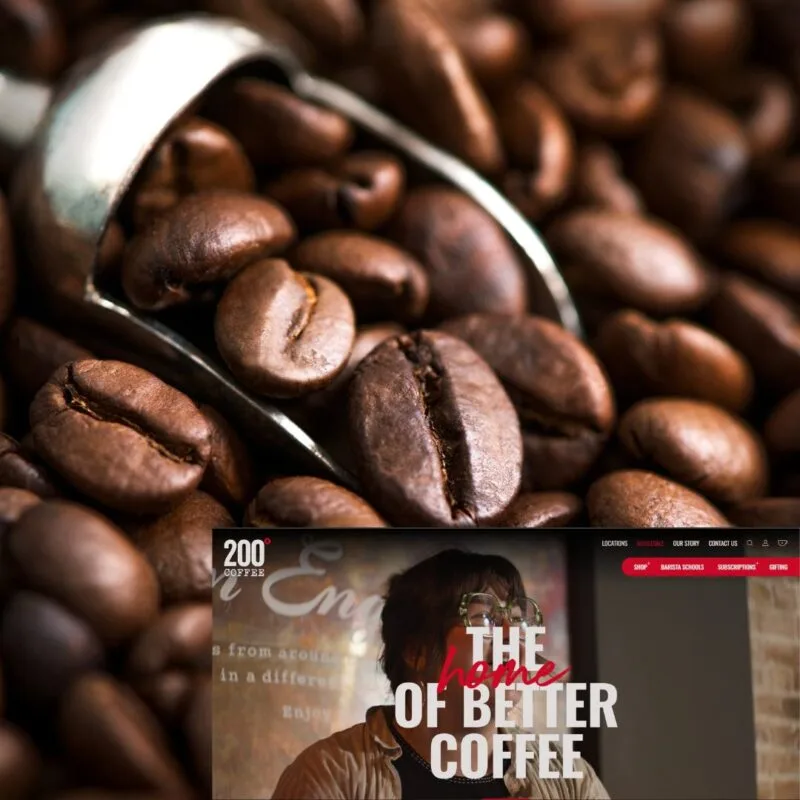
A growing chain had outgrown one generic journey.
The Nottingham coffee chain needed an eCommerce experience that kept pace with its stores and served coffee enthusiasts, shop visitors, office managers and bulk purchasers.
Find the four audiences before drawing screens.
A two-day workshop identified four segments: eCommerce, Shops, Barista Schools and Wholesale. Competitor analysis helped define where the experience could feel distinct.

Turn journey maps into conversion-led wireframes.
Wireframes followed the customer journeys and used conversion rate optimisation as the design lens. Mobile decisions were made from the first sketch rather than adapted at the end.
Carry the store experience onto the screen.
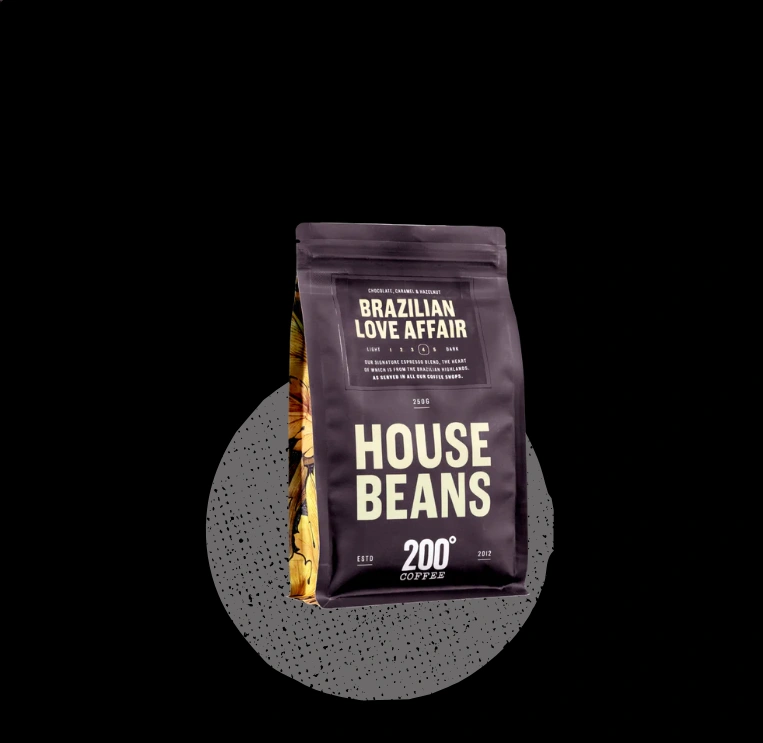
Packaging colours influenced product listing pages and shop-window elements moved into the digital system. The result connected what customers saw in-store with what they experienced online.
Use Shopify to support exploration and repeat purchase.
Interactive origin maps, subscription pages and streamlined product listings made browsing more intuitive. Shopify apps supported different buying needs without turning the site into a collection of disconnected tools.
What the sequence shows
A journey shaped around learning and course intent. Clearer routes for offices and bulk purchasers.
A stronger route from session to checkout.
The source reports a 36% year-on-year increase in conversion rate, 65% more sessions reaching checkout and 46% growth in new-customer sales.
Build the next result worth publishing.
Bring us the product, funnel or market that needs a clearer growth system.
Let’s talk about your project