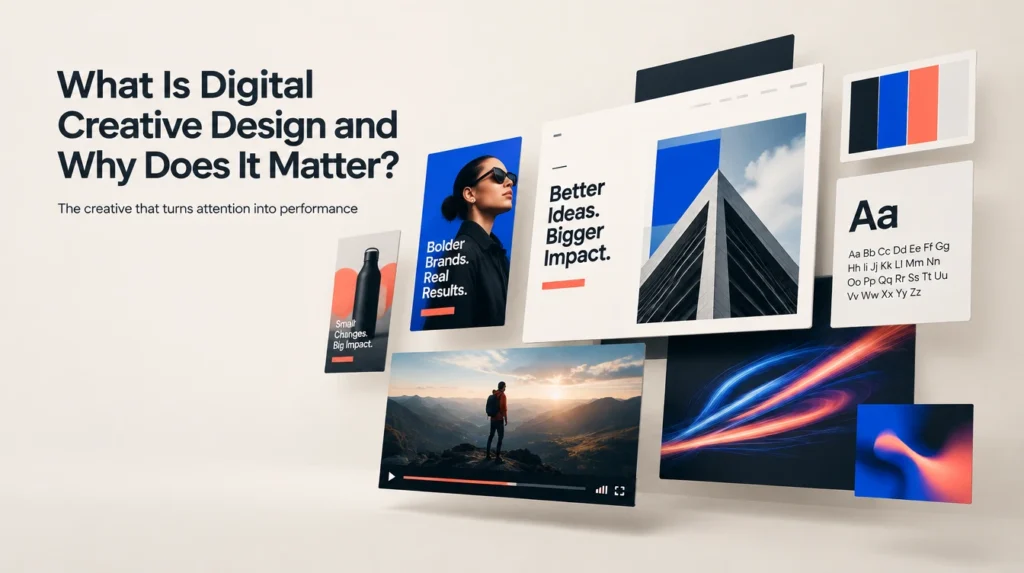
Digital creative is the set of visual and motion assets a brand runs across digital channels to communicate and sell. It matters because the creative, not the targeting, does most of the persuading. Nielsen pins 65% of an ad’s sales lift on the creative itself. This guide covers what digital creative is, the main types, and why it decides whether your ad spend works.
Key takeaways
- Digital creative is the visual and motion assets that run across ads, social, web, and video.
- Creative drives about 65% of an ad’s sales lift, per Nielsen, more than targeting or media.
- Strong creative can drive up to 80% of in-market success on TV and 89% on digital.
- You can’t out-target weak creative. The asset does the convincing once targeting finds the person.
- As ad costs rise, better creative is the lever that still moves your return.
What is digital creative?
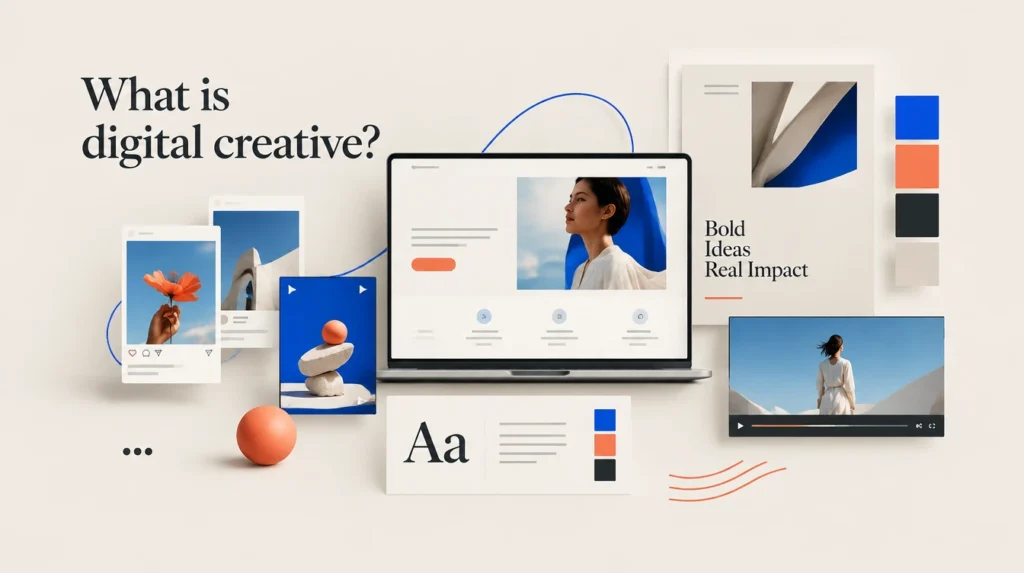
Digital creative is the collection of visual and motion assets a brand uses across its digital channels, the ad images, social posts, videos, and web visuals that carry the message to the audience. It’s the thing a buyer actually sees and reacts to, the part of marketing that turns a strategy into something scroll-stopping.
Don’t confuse it with plain graphic design or with the strategy above it. Graphic design is one input. Digital creative is the finished asset built to perform in a specific channel. And it sits below the big idea: the campaign concept decides what to say, the creative is how that gets made for Instagram, a landing page, or a six-second video.
What are the main types of digital creative?
Digital creative spans every visual format a brand runs online. Each type lives in a different place and does a different job, but they all share one goal: stop the scroll and move the viewer toward an action. Most brands run several of these at once.
- Static ad creative is the single-image ad that runs on Meta, Google Display, and similar placements, built to land one message fast.
- Social content is the organic and paid posts shaped for each platform’s feed, from carousels to stories.
- Video and motion is the short-form video, animation, and motion graphics that now dominate paid social and YouTube.
- Web and landing-page visuals are the hero images, graphics, and layouts that carry the brand after the click.
- Display and banner creative is the sized-to-placement ad that runs across the web and programmatic networks.
- Email creative is the headers, graphics, and layouts that make a campaign feel like the brand in the inbox.
Why does digital creative matter for performance?
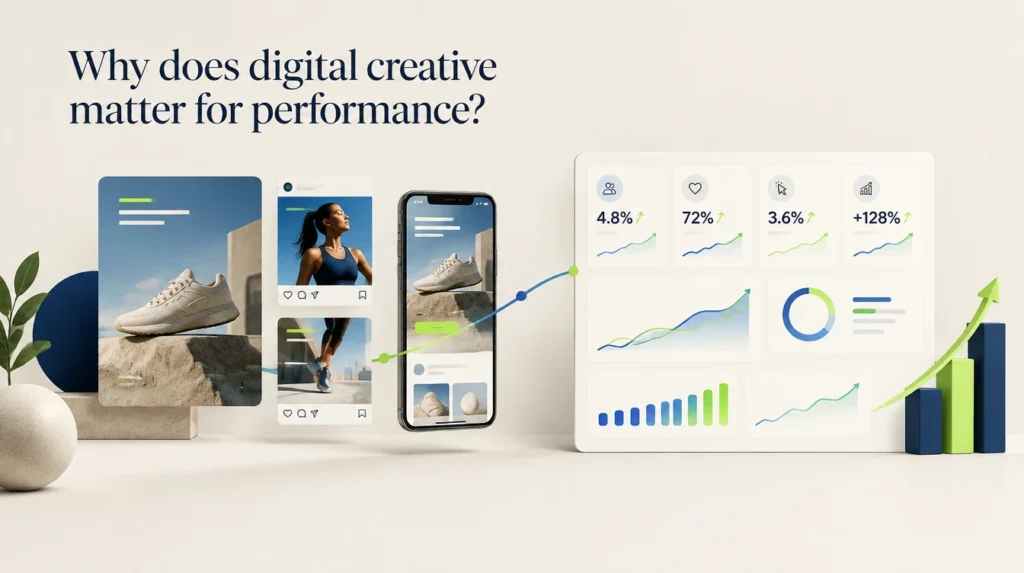
Digital creative matters because the asset itself does most of the selling. Nielsen’s Project Apollo found that 65% of a brand’s sales lift from advertising comes from the creative, more than media placement or targeting. The creative is the single biggest lever you control.
Think about what that means for your ad account. Targeting finds the right person. The creative convinces them. You can run flawless audience work behind a weak asset and still watch it flop, because the thing doing the persuading never earned the click. We see it constantly: the account doesn’t have a targeting problem, it has a creative problem.
The upside compounds when the creative is strong. High-quality creative can drive up to 80% of in-market success on TV and 89% on digital. And as CPMs climb, meaning the cost to reach a thousand people keeps rising, creative is the lever that still moves your return. You can’t always buy cheaper reach, but you can always make the asset work harder.
Suspect your ads are losing to weak creative, not bad targeting? A benchmarked growth audit shows exactly where your creative is leaking return, using your own ad account.
Book a growth auditWhat makes digital creative actually perform?
Strong digital creative hooks fast, makes the brand obvious, fits the channel, gets tested, and points at a clear offer. Those traits separate an asset that earns its spend from one that burns it. Miss one and the creative underperforms, no matter how polished it looks in the file.
| Trait | Weak creative | Strong creative |
|---|---|---|
| Hook | Slow, buries the point | Lands in the first second or two |
| Brand clarity | Could be any brand | Obvious who it’s from |
| Channel fit | One asset forced everywhere | Built for the placement |
| Testing | One version, run and hope | Many variations, winners scale |
| Offer link | Pretty, but no ask | Clear next step every time |
One trait outweighs the rest. The hook. On paid social you have a second or two before the thumb moves, so the asset either stops the scroll in that window or it never gets the chance to say anything else. Win the first beat, then worry about the rest.
How does digital creative connect to the rest of your marketing?
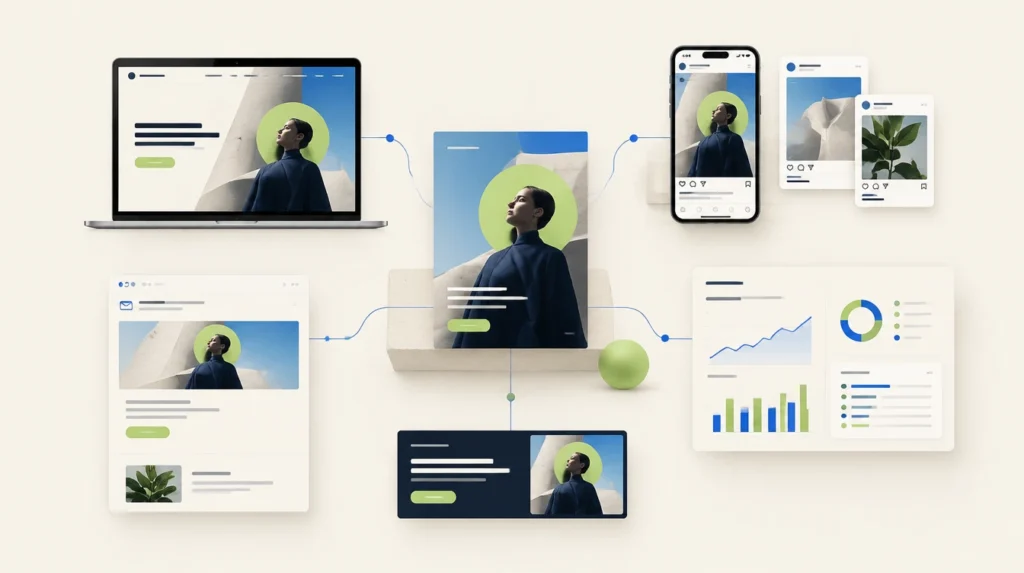
Digital creative sits at the end of a chain. Brand strategy decides what you stand for. Creative direction sets the overall look. The campaign concept sets the idea for a push. Digital creative is the finished asset that runs, and performance media spends real budget behind it.
At Morphiaas USA, a performance marketing agency serving businesses across the United States, we build the creative and run the media as one loop, so the asset is tested against real spend instead of guessed at in a meeting. Our creative design work produces the digital creative, then our performance media program puts it in market and reports back to revenue. For the idea layer above the asset, our guide on developing a creative campaign concept covers where the creative starts.
Frequently asked questions
What’s the difference between digital creative and graphic design?
Graphic design is the craft of arranging visual elements. Digital creative is the finished, channel-ready asset built to perform, often using graphic design as one input. A designer might make a graphic; digital creative is that graphic shaped into an ad, a social post, or a landing-page visual with a job to do in a specific placement.
Does digital creative really affect ad performance?
Yes, more than almost anything else you control. Nielsen found creative drives about 65% of an ad’s sales lift, outweighing media and targeting. Strong creative can account for up to 89% of in-market success on digital. The asset is doing the persuading, so weak creative caps what even perfect targeting can achieve.
How often should I refresh my digital creative?
Refresh when performance drops, which on paid social often means every few weeks as creative fatigue sets in. Fatigue is when your audience has seen an ad so often it stops responding. The fix is a steady pipeline of new variations, not one hero asset you run until it dies.
What makes a digital ad creative stop the scroll?
A strong hook in the first second or two, built around something the viewer actually cares about. Movement, a bold visual, a clear benefit, or a pattern break all help. The goal is to earn one extra beat of attention, because without that opening pause, the rest of the ad never gets seen.
Do small brands need digital creative or just good targeting?
They need both, but creative does the heavier lifting. Targeting on most platforms has become largely automated, so the main lever a small brand still controls is the asset itself. A distinctive, well-tested creative lets a small budget compete, because the platform rewards creative that earns engagement.
If your ad spend isn’t returning what it should, the creative is usually the gap. Get a benchmarked growth audit and a plan you keep whether or not we work together.
Get a benchmarked growth audit