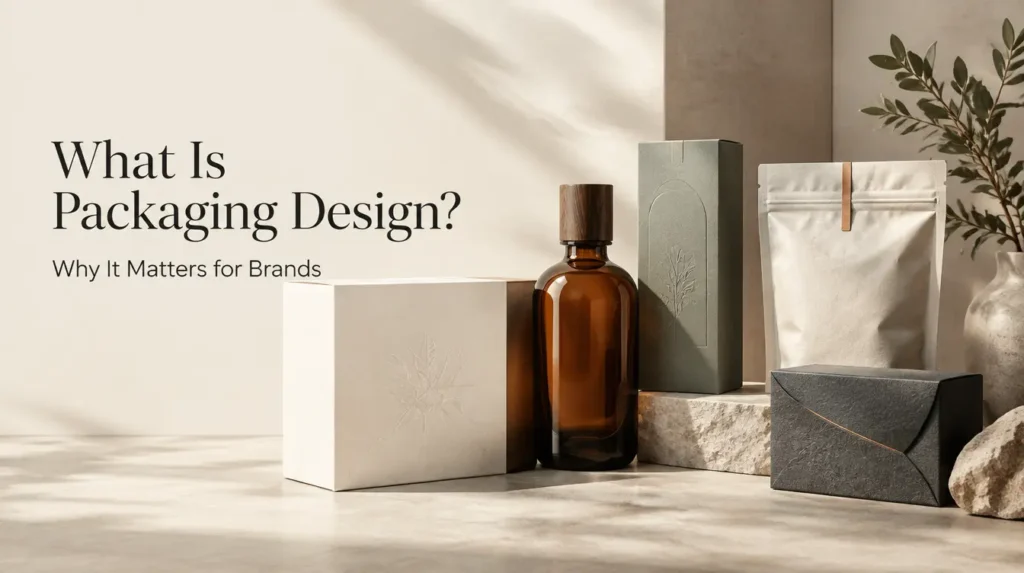
Packaging design is the work of shaping both a product’s physical container and the visuals printed on it, so it protects the product and sells the brand at the same time. It matters because more than half of US shoppers judge how upscale a brand is from its packaging alone, before they ever try what’s inside. The box is an ad you paid to ship.
Key takeaways
- Packaging design covers both the structure (box, shape, material) and the graphics (color, type, imagery).
- 51% of shoppers say premium packaging makes a brand seem more upscale, per Dotcom Distribution.
- 34% say premium packaging makes them want to buy from the brand again.
- 81% of online shoppers prefer boxes over bags, which shapes the unboxing experience.
- Packaging is your brand made physical, so it has to match the brand, not just look nice.
What is packaging design?
Packaging design is the strategic and creative process of shaping a product’s container and the visuals on it. It does two jobs at once: protecting what’s inside, and communicating the brand to the buyer. The best packaging makes a product safe to ship and impossible to ignore on a shelf.
The work splits into two sides. Structural design covers the physical form, the box, the shape, the material, how it opens. Graphic design covers the surface, the color, typography, and imagery that carry the brand. Both have to work together, because a gorgeous label on a flimsy box still feels cheap in the hand.
Here’s the part brands underrate. For most products, the packaging is the first physical thing a buyer touches from your brand. It’s a first impression you already paid to manufacture and ship, so it may as well do some selling.
Why does packaging design matter for brands?
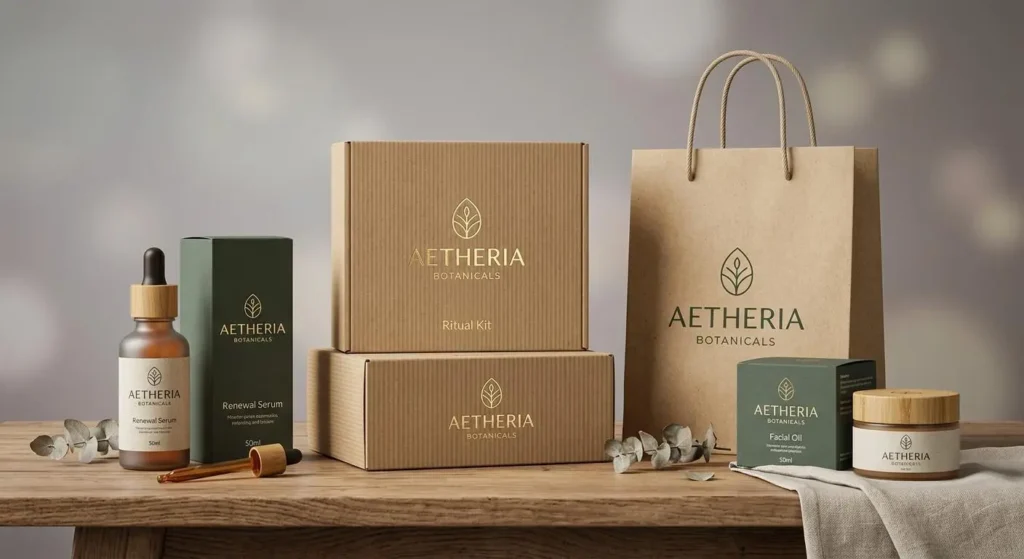
Packaging design matters because it shapes what a buyer thinks your product is worth before they use it. It also shapes whether they buy at all. Ipsos found that 72% of consumers say packaging design influences their purchase decisions. And a Dotcom Distribution survey of 1,150 US online shoppers found that 51% think a brand is more upscale when the packaging feels premium, 41% get more excited to open it, and 34% say it makes them want to buy again.
Sit with what those numbers mean for pricing. Perceived value is set partly by the package, which means good packaging can justify a higher price and earn the repeat purchase. That’s not decoration. That’s margin and retention doing their job.
The flip side is just as real. Cheap packaging on a good product tells the buyer you cut a corner, and they start wondering where else you cut one. And packaging travels. Gift-like packaging makes people more likely to post the unboxing, which is reach you didn’t pay a platform for.
Wondering whether your packaging is pulling its weight or quietly costing you repeat buyers? A benchmarked growth audit shows where your brand experience breaks down, using your own numbers.
Book a growth auditWhat are the key elements of packaging design?
Strong packaging design combines five elements: color, typography, imagery, structure, and material. Each one carries part of the brand, and they have to agree with each other. When one fights the rest, the whole package feels off, even if the buyer can’t say why.
- Color drives recognition and emotion. It’s often the first thing a buyer registers from across an aisle, before any words.
- Typography carries the brand’s voice and has to stay legible at a glance, not just look pretty in a mockup.
- Imagery and graphics tell the product’s story and set the mood in a way words alone can’t.
- Structure and shape decide shelf standout and how the package functions, which matters because 81% of online shoppers prefer boxes over bags, per the Dotcom Distribution survey.
- Material signals quality and sustainability, and 66% of shoppers name eco-friendly packaging the top sustainability factor that makes them choose a brand.
Get all five pointing the same direction and the package reads as one confident thing. Miss on one and it reads as a product that didn’t quite get finished.
How does the packaging design process work?
The packaging design process runs in five stages: research, concept, prototype, test, and finalize. Each stage feeds the next, and skipping the research or the test is how brands end up with packaging that looks good in a file and fails in a warehouse.
- Research the buyer and the shelf. Learn who buys, how they shop, and what competing packs already look like, so you can stand apart on purpose.
- Develop concepts tied to the brand. Sketch directions that express the brand’s identity, not generic “nice design” that could belong to anyone.
- Prototype in physical form. Build a real sample you can hold. A design only exists once it exists off the screen.
- Test with real buyers. Put the prototype in front of your actual audience, in hand and on a real shelf or in a real mailer.
- Finalize for production. Lock the files, materials, and specs so what ships matches what you approved.
Test it under real conditions, not just studio lighting. We’ve seen a package that looked rich on screen turn muddy under warehouse fluorescents, and nobody caught it until the first pallet shipped.
What makes packaging design actually work?
Packaging works when it stands out on the shelf, fits the brand, signals the right value, functions well, and makes people want to buy again or share. Those traits separate packaging that sells from packaging that just wraps. Miss one and the whole thing underperforms, however polished it looks.
| Trait | Weak packaging | Strong packaging |
|---|---|---|
| Shelf standout | Blends into the category | Catches the eye from a distance |
| Brand fit | Could belong to anyone | Unmistakably this brand |
| Perceived value | Reads cheaper than the product | Signals the price is fair or a deal |
| Function | Hard to open or protect | Easy, safe, satisfying to open |
| Repeat and share | Forgotten after one use | Earns a reorder and a post |
One trait carries the rest. Brand fit. A beautiful package that doesn’t match the brand just confuses the buyer and wastes the spend. Start from who the brand is, then make it look the part.
How does packaging connect to the rest of your brand and marketing?
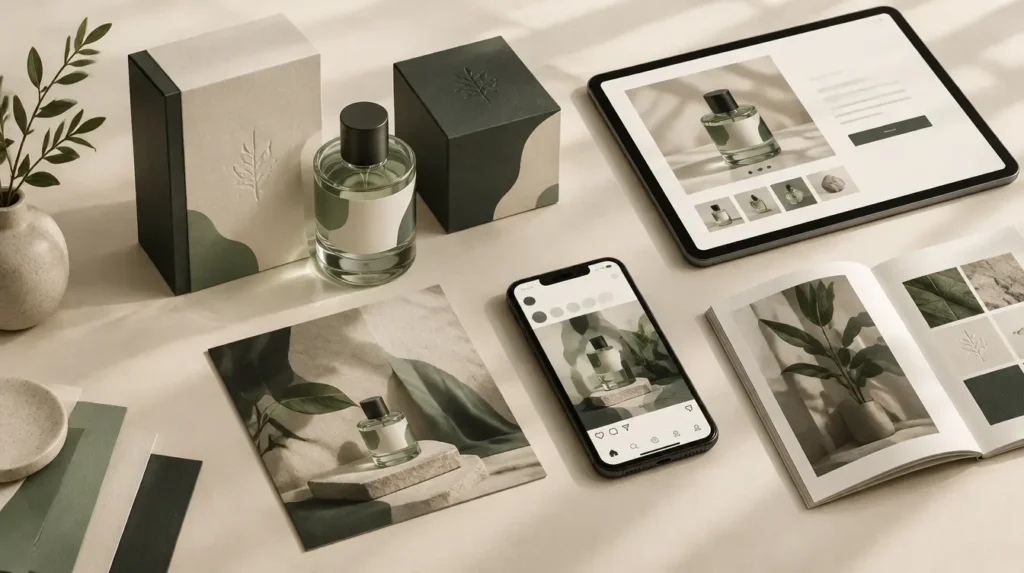
Packaging sits inside a bigger system. Brand strategy decides what you stand for. Creative direction sets how the brand looks and feels overall. Packaging is that identity made physical, the brand you can hold. Performance media then drives the right people to buy it.
At Morphiaas USA, a performance marketing agency serving businesses across the United States, we build the packaging to match the brand, not as a one-off art project. Our creative design work covers packaging and the creative system around it, grounded in the positioning our brand strategy work defines. For the vision that sits above every asset, our guide on what creative direction is and why it matters covers the layer packaging expresses.
Frequently asked questions
What’s the difference between packaging design and branding?
Branding is the full identity: your name, values, voice, and visual system. Packaging design is one physical expression of that identity, the container and its visuals. Branding decides what the brand is; packaging is one of the most tangible places a buyer experiences it, often the first one they hold in their hands.
Does packaging design really affect sales?
Yes. Survey data shows packaging shapes perceived value and repeat purchase: 51% of shoppers find a brand more upscale with premium packaging, and 34% say it makes them want to buy again. Packaging influences the decision at the shelf and the odds of a reorder, so it affects both acquisition and retention.
How much does packaging design matter for a small or DTC brand?
It matters a lot, because for DTC brands the package is often the only physical touchpoint. The unboxing is your in-person moment, and gift-like packaging makes buyers more likely to share it on social media. A small brand can punch well above its budget with packaging that feels considered and distinctly its own.
What are the main types of packaging design?
Packaging generally falls into primary (the container touching the product, like a bottle), secondary (the outer box or carton), and tertiary (shipping and bulk packaging). Each layer has a different job, from protecting and presenting the product to surviving transit, and each is a chance to express the brand.
How often should a brand update its packaging?
There’s no fixed schedule, but most brands refresh packaging every few years or when something shifts: a new product line, a repositioning, a dated look, or a sustainability move. Update it deliberately, keeping what makes the brand recognizable, rather than redesigning so often that buyers stop recognizing you.
If your product is better than your packaging makes it look, you’re leaving perceived value on the table. Get a benchmarked growth audit and a plan you keep whether or not we work together.
Get a benchmarked growth audit