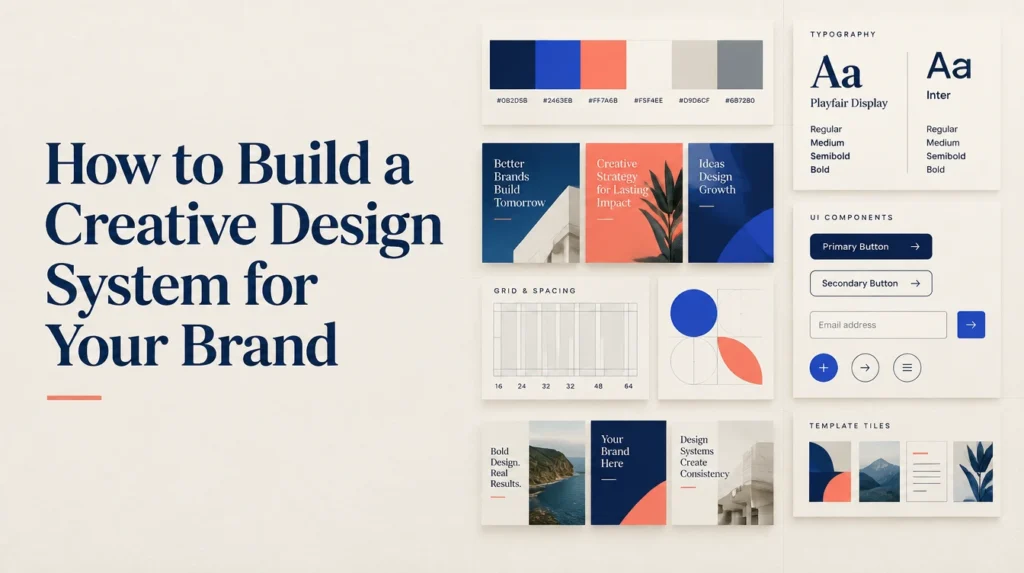
A creative design system is the living set of rules, components, and templates that keeps every piece of brand creative consistent and on-strategy. It goes past a logo file or a one-page style guide. It governs color, type, imagery, voice, and the templates your team actually ships. Done right, it is worth money. Consistent brand presentation lifts revenue by up to 23%.
Key takeaways
- A creative design system is a living operating system for your brand, not a static PDF.
- Consistent brand presentation is tied to a 23% average revenue increase, per Lucidpress data.
- It beats a style guide because it ships templates and components people use daily, not rules they ignore.
- You can build a lean one in 7 steps over 4 to 8 weeks, then maintain it as a living asset.
What is a creative design system?
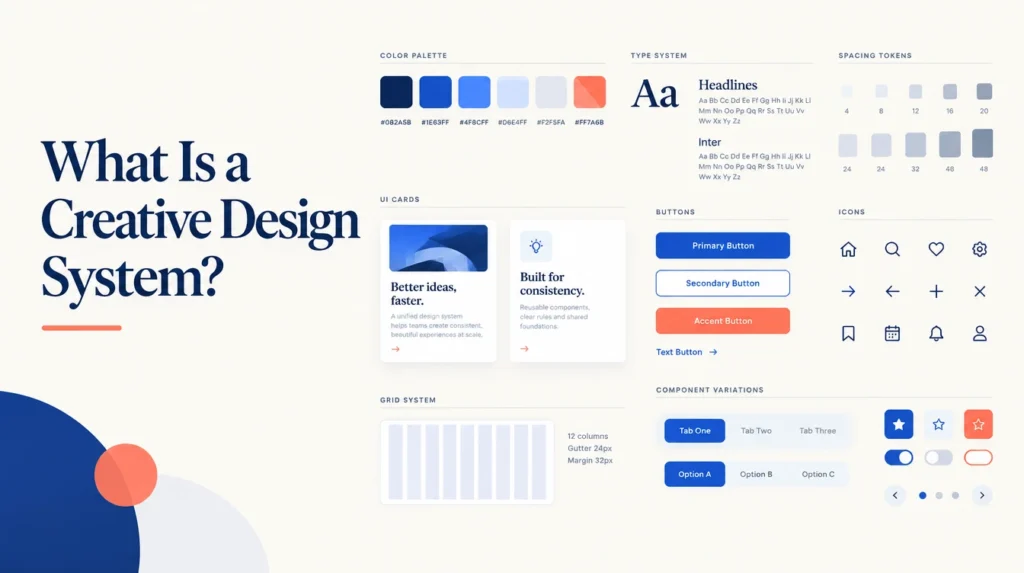
A creative design system is a structured, reusable framework that defines how your brand looks, sounds, and shows up across every piece of creative. It bundles your visual foundations, a component library, ready-to-use templates, and the rules for using them. Think of it as the source of truth your whole team builds from.
Most brands have pieces of this already. A logo somewhere. Brand colors in a slide. A tone-of-voice note nobody reads. A system connects those pieces and makes them operational. It has four layers.
- Foundations. Color, typography, logo rules, spacing, and design tokens. A design token is a named value, like your exact brand blue saved as one variable, so every tool pulls the same number.
- Components. Reusable building blocks: buttons, cards, ad frames, social layouts, email headers.
- Templates. The repeat formats your team ships weekly, pre-built so nobody starts from scratch.
- Governance. Who owns it, how it versions, and how new assets get approved.
At Morphiaas USA, a performance marketing agency serving businesses across the United States, we treat the system as creative infrastructure. Build it once, and every campaign after that moves faster and stays on-brand.
Why does your brand need a creative design system?
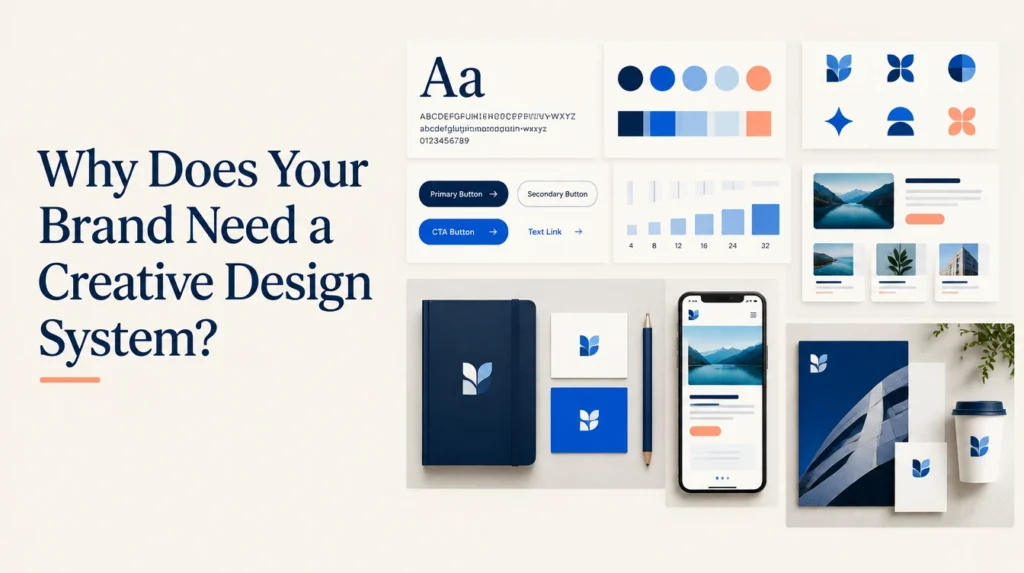
Because inconsistency costs real money, and consistency makes it. Brands that present consistently see an estimated 23% average revenue increase, and a later Lucidpress report put the figure as high as 33%. The flip side is just as sharp: 81% of companies still deal with off-brand content shipping out the door.
Every off-brand asset chips away at recognition. A customer who sees three versions of your brand sees a weaker brand. And weak recognition means you pay more to be remembered. According to Inc.’s reporting on the Lucidpress and Demand Metric study, the revenue tied to always presenting the brand consistently sits at 23%.
Here is the thing most guides skip. A style guide nobody opens is a PDF, not a system. The value shows up only when the rules live inside the tools your team works in every day. We learned this the expensive way on a retail account that had a beautiful 40-page brand book and still shipped four different blues across its ads.
We ran the numbers on a Houston DTC fashion brand after we built its creative system. Monthly revenue moved from $2,079 to $21,703, with the conversion rate climbing from 0.30% to 1.37%. The system was not the only lever. But creative that stopped fighting itself was a big part of it. Source: Morphiaas USA client campaign data, 2024.
The later, higher figure comes from the Lucidpress State of Brand Consistency report via Agility PR, which recorded a 33% lift and the 81% off-brand-content problem.
Creative design system vs brand style guide, what's the difference?
A brand style guide is a static rules document. A creative design system is a living, operational framework that includes those rules plus the components and templates to act on them. The guide tells you the brand blue. The system hands you a button already in that blue, ready to drop in.
| Dimension | Brand style guide | Creative design system |
|---|---|---|
| Format | Static PDF or page | Living, versioned framework |
| Contains | Rules and specs | Rules plus components and templates |
| Used by | Read occasionally | Built from daily |
| Ownership | Often nobody | Assigned owner, clear process |
| Updates | Goes stale | Maintained as live asset |
You need both. The guide is the reference layer inside the system. But a guide alone leaves your team doing the hard part by hand, which is exactly where off-brand work creeps in.
How do you build a creative design system? The 7 steps
You build it in seven steps, moving from audit to rollout. The order matters. Lock your foundations before you build components, and build components before you template. Skip ahead and you rework everything twice.
- Audit what you already have. Pull every live asset: ads, decks, emails, packaging, social. Line them up. You will spot the drift fast, the three blues and two fonts nobody signed off on. This audit is your baseline and your argument for the project.
- Lock the foundations. Set color, typography, logo rules, and spacing as design tokens. Save the exact hex, not “our blue.” Name each value once so every tool pulls the same source. This is the layer everything else inherits.
- Build the component library. Turn repeat elements into reusable blocks: ad frames, social layouts, buttons, card styles, email headers. Each one carries the foundations automatically, so a designer cannot accidentally go off-brand.
- Template the formats you ship weekly. Static ad, carousel, story, email, landing hero. Pre-build the ones your team touches most. And start with the five formats that eat the most hours, not the fancy one-off.
- Write the usage rules and voice. Short, plain, and specific. When to use the stacked logo. What the brand sounds like in a caption versus a headline. One clear example beats a page of theory.
- Assign an owner and set versioning. A system without an owner rots. Name one person accountable, set how changes get proposed and approved, and version the whole thing so people know what is current.
- Roll it out and train the team. Walk every creator through it, link it where they work, and make the templates the default starting point. Because adoption is the whole game. A perfect system nobody uses changes nothing.
Want a creative system that ties straight to campaign performance? We build and benchmark it against your numbers.
Book a growth auditHow long does it take and who owns it?
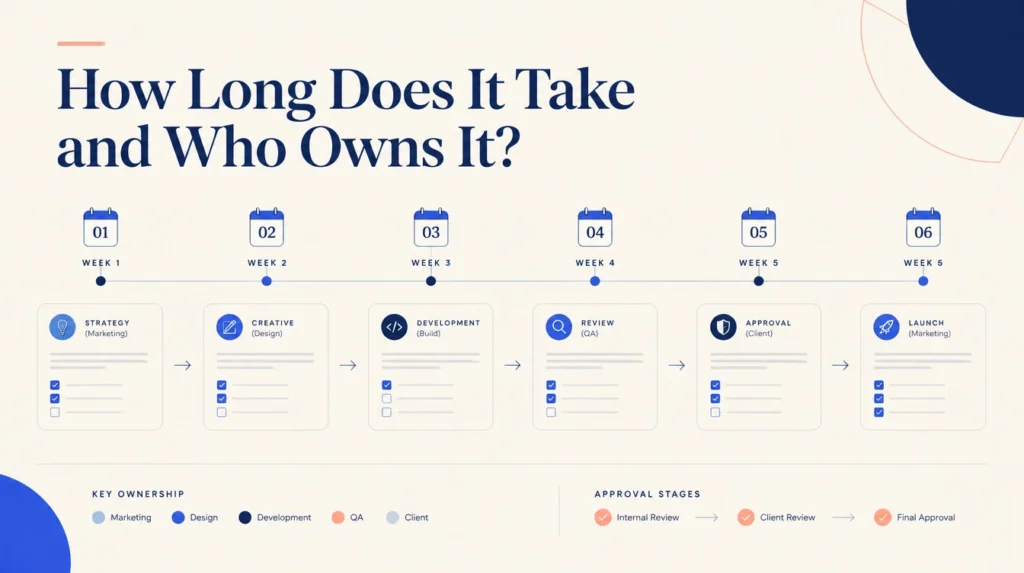
A lean creative design system takes 4 to 8 weeks to build, depending on how much drift the audit turns up and how many formats you ship. One person should own it, usually a creative or brand lead, with a clear process for approving new components.
The word “living” is the point. A system that freezes on launch day is just a slower style guide. Review it every quarter, retire templates nobody uses, and add the formats new channels demand. A system that grows with the brand keeps earning its build cost. For the visual side of this, see our guide on building a consistent visual identity across digital channels.
Our creative design services cover the full build, from audit to rollout. And because the system should reflect what the brand stands for, it works hand in hand with brand strategy, which defines the message the system then expresses.
Frequently asked questions
How much does a creative design system cost to build?
Cost depends on scope: how many formats, how much existing drift, and whether you build in-house or with an agency. The real question is not cost but return. With consistent branding tied to a 23% revenue lift, a focused system usually pays back inside a few campaign cycles.
Do small brands really need a creative design system?
Yes, and arguably more than big ones. Small teams ship fast and wear many hats, which is exactly how inconsistency sneaks in. A lean system of foundations plus five core templates saves hours every week and keeps a growing brand coherent.
Is a creative design system the same as brand guidelines?
No. Brand guidelines are the rules layer. A creative design system includes those rules plus the live components and templates your team builds from daily. Guidelines tell you what to do; the system gives you the parts to do it.
What tools do I need to build one?
Most teams use a design tool for components and templates, a shared space for tokens and rules, and a single home where the whole system lives and versions. The tool matters less than the discipline. A simple, well-maintained system beats a sophisticated one nobody updates.
How do I keep the system from going stale?
Assign one owner, review it quarterly, and version every change. Retire templates that go unused and add formats as new channels arrive. Treat it like product, not a document, and it stays useful instead of becoming the next PDF nobody opens.
Your creative should pull in one direction and show up in the numbers. We build the system and tie it to your growth.
Get a benchmarked growth audit