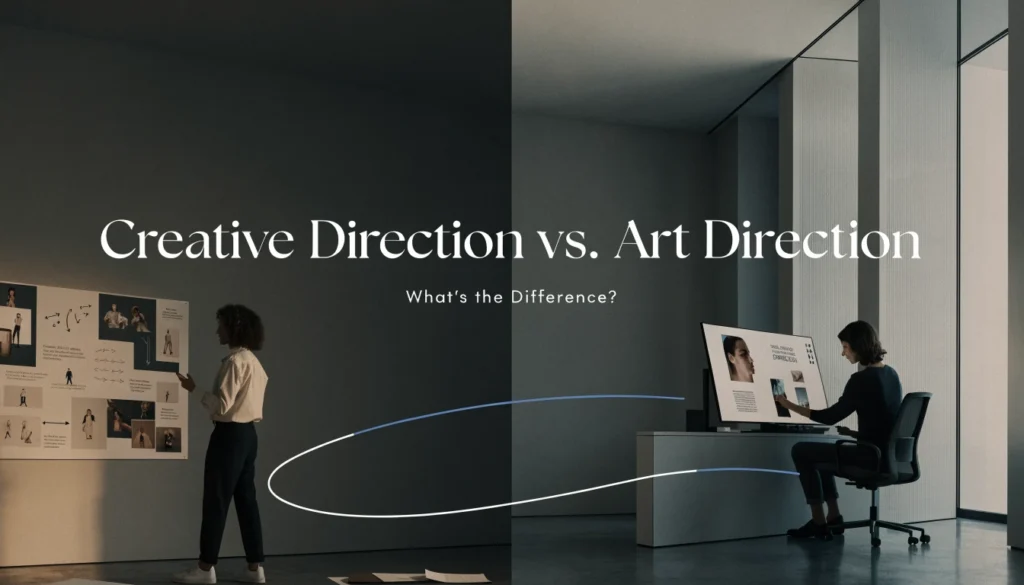
Creative direction vs art direction trips up almost everyone, because the titles get swapped on job posts and in agency pitches. They do different jobs. Creative direction owns the whole vision and the reason behind it. Art direction owns how that vision actually looks. Hire the wrong one and you pay senior money for the wrong skill.
Key takeaways
- Creative direction decides what to say and feel. Art direction decides how it looks.
- Creative direction is the senior seat, and roles typically want 6+ years of experience.
- Art directors earn a median $114,850 per year in the US, per the Bureau of Labor Statistics.
- One person can do both on a small team, but the two skill sets pull in different directions.
- You need creative direction when the brand feels scattered, art direction when the visuals are inconsistent.
What's the difference between creative direction and art direction?
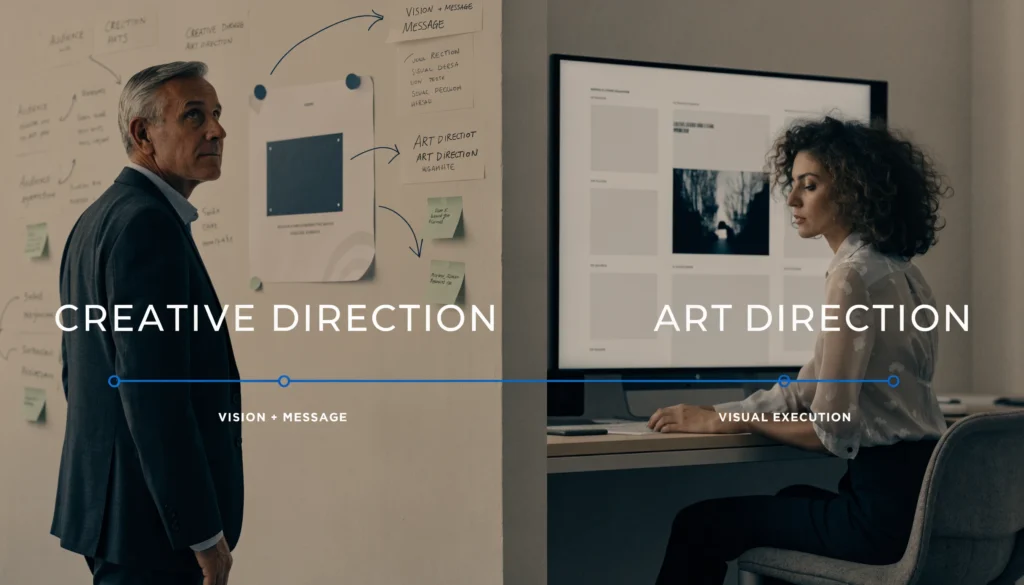
Creative direction owns the overall vision and the why behind it. Art direction owns the visual execution, the how. One decides what a brand should say, mean, and feel. The other decides how a specific piece looks to deliver that. Both matter, but they sit at different levels of the work.
Here’s the mental model that sticks. Creative direction sets the destination. Art direction builds the thing that gets you there. The confusion is real because the roles overlap, the titles get used loosely, and on a small team one person often wears both hats. But the jobs themselves are distinct.
What does a creative director do?
A creative director sets the big idea and the creative vision, then keeps every piece of work true to it. They own the concept, brief the team, approve or reject work against the vision, manage the client relationship, and hire and mentor the people under them. They answer for the whole.
This is the senior seat in the creative team. Job-posting analysis from Rasmussen University found that most creative director roles want six or more years of experience, while art director roles usually ask for three to five. That gap tells you something real about the hierarchy.
In plain terms, the creative director is the person who decides whether the entire campaign is right. Not whether the kerning is tight, whether the idea works. They defend the vision as the team scales and the work threatens to drift into a dozen directions at once.
What does an art director do?
An art director executes the visual side of the creative vision. They decide layout, imagery, typography, and color, direct the designers and photographers, own the timelines and budgets for the visual work, and give detailed feedback on craft. They make the idea actually look like something.
The role carries real weight and real pay. Art directors earn a median of $114,850 per year, according to the US Bureau of Labor Statistics as of May 2025, and the field is projected to grow about 4% through 2035. It typically wants three to five years of hands-on experience.
Think of the art director as the person who turns a concept into pixels and print. The creative director says “this campaign should feel bold and a little rebellious.” The art director decides what bold and rebellious actually look like on the page, and makes sure every asset delivers it.
Creative direction vs art direction, side by side
The fastest way to see the split is to line the two up against the same questions. Both are senior creative roles, but they own different layers of the work, answer to different questions, and break the brand in different ways when they go missing.
| Dimension | Creative direction | Art direction |
|---|---|---|
| Focus | The whole vision and the why | The visual execution and the how |
| Question it answers | What should this say and feel? | How should this look? |
| Scope | Strategic, brand-wide | Project and asset level |
| Seniority | Senior, sets direction | Executes within direction |
| Typical experience | 6+ years | 3 to 5 years |
| Breaks without it | Scattered, directionless brand | Weak, inconsistent visuals |
The cleanest way to remember it: one sets the destination, the other builds the vehicle for one leg of the trip. You can have a brilliant idea that looks terrible, or flawless visuals that add up to nothing. You need both seats filled.
Can one person do both?
Yes, especially on a small team, and plenty of people do. But the two skill sets pull in different directions. Creative direction is strategic and conceptual. Art direction is hands-on and detail-driven. Asking one person to live in both, at scale, usually means one job gets shortchanged.
Most small brands start with a single hybrid person, or an agency that supplies both functions, then split the roles as they grow. We’ve seen founders burn months expecting a brilliant art director to also set brand strategy, and it rarely lands. The craft is there. The strategic altitude usually isn’t, because that’s a different job.
Which one does your brand actually need?
You need creative direction when the brand feels scattered, when nothing ties the website, the ads, and the social feed together. You need art direction when the idea is clear but the execution looks weak or inconsistent. And sometimes the honest answer is that both are missing, which means you need a system, not just one hire.
Quick cues to tell which gap you’re staring at:
- No cohesive idea across channels, and every piece feels like a different company. That’s a creative direction gap.
- Strong concept, but the visuals are messy, off-brand, or amateur. That’s an art direction gap.
- Neither the idea nor the execution holds together. You need both, built as one system.
At Morphiaas USA, a performance marketing agency serving businesses across the United States, we build both layers together instead of selling you a title. Our creative design work covers direction and execution, grounded in the vision our brand strategy work defines. For the full breakdown of the senior layer, our guide on what creative direction is and why it matters goes deeper on the role above.
Not sure whether your brand needs vision, execution, or both? A benchmarked growth audit pinpoints exactly where your creative is breaking down, using your own channels.
Book a growth auditFrequently asked questions
Is a creative director higher than an art director?
Usually yes. The creative director sets the overall vision and often has final approval, while the art director executes the visual side within that vision. Creative director roles typically require more experience, around six or more years versus three to five for art directors, which reflects the seniority difference.
Does a small business need both a creative director and an art director?
Not always as separate hires. Many small businesses start with one person or an agency covering both functions, then split them as the brand grows and the workload demands it. What matters is that both jobs get done, the vision and the execution, not that you have two separate titles on payroll.
Is art direction part of creative direction?
In a sense, yes. Art direction sits within the broader creative vision that creative direction defines. The creative director sets the concept and standards; the art director executes the visual part of that concept. They are distinct roles, but art direction operates inside the direction creative leadership sets.
Can an agency handle creative direction and art direction instead of hiring?
Yes, and for many businesses it’s the more practical route. An agency supplies both functions without the cost and commitment of two senior full-time hires. That works especially well for smaller brands or companies that need strong creative but don’t yet have the volume to justify a full in-house creative team.
What’s the difference between an art director and a graphic designer?
An art director decides the visual direction and oversees how designers execute it. A graphic designer produces the actual assets, the layouts, logos, and graphics, within that direction. The art director sets the look and reviews the work; the designer makes the files. One directs, the other produces.
If your creative feels off and you can’t name why, that’s a fixable problem. Get a benchmarked growth audit and a plan you keep whether or not we work together.
Get a benchmarked growth audit